Showing posts with label 2017. Show all posts

Monday, September 21, 2026

Alice Jones: The Impossible Clue written by Sarah Rubin and reviewed by Debra Gantz

Summary:
This is a fabulous mystery for elementary or middle schools where the genre is needed. The main character is teased by a classmate and another classmate fawns on her and neither are classmates she wants to hang with, but the mystery requires it. (The way that becomes clear is itself fascinating.) Her father is a news writer and allows her to work through a missing person in their town (as long as he gets the scoop, of course). The danger is real, the money involved in the scandal of a missing scientist is massive, and the loyalty of the sleuth to her classmates is palpable. 

Straight Talk for Librarians: Mystery genre is a big one in my elementary schools. I have trouble finding mysteries that my students will engage with enough for the unit taught. I now will be checking out all of Sarah Rubin's mysteries as this one worked so very well. Alice Jones is a likeable character with very real feelings about middle school and her classmates. She loves to solve mysteries. She does not have time in her life for nonsense, including spit balls thrown by others at her. Alice is a twin, but her twin lives with their Mom while Alice lives with their Dad. Her twin is an actress and they butt heads whenever they are together. Since her twin is there for the summer, Alice is feeling all her feelings. It does not take long for Alice to recognize that the villain in this mystery may not be the person who kidnapped the scientist. Uncovering the information puts Alice and her family and friends in grave danger. I especially liked that the conclusion is not perfectly orchestrated as solutions to big problems rarely are neat. I could not put this one down.

Ten: A Soccer Story written by Flint Shamini and reviewed by Debra Gantz

Summary:
Maya is 11 years old and obsessed by soccer. In Malaysia where she lives, soccer is for boys. Maya is not okay with that. She knows the national teams. She watches all the games, not just the World Cup games. She has a favorite player. Yes, Zico, her favorite player does not make a penalty shot that could have kept his team playing, but she still thinks he is the best. Maya and her brother Rajiv know something is amiss at home with their parents. They are terribly sad when it becomes clear they were right. So, Maya now has to create a girls soccer team, get them the support they need for uniforms and field time, and save her family. 
 
Straight Talk for Librarians: First up is the soccer fanaticism which will appeal to many students since we just had another World Cup in 2026. Secondly the race/cultural issue: Maya lives in Malaysia in a very small town. Her town is very patriarchal, she goes to a religious school where she stands out, her parents are a mixed race/culture marriage, and her grandmother is always going on how the kids and that marriage embarrasses her. Books including many races and cultures can be quite appealing to students wanting to understand others around them. Finally teen angst: both Maya and Rajiv have feelings of duty to their families, but Maya also has a strong frustration with her place in society. She does not want to stay quiet and meek as her grandmother seems to want her to be. She wants to be a soccer player, though she has only watched it on TV. She wants to learn to speak up for her dream, encourage others to join her, and find a way to be taken seriously. That is very much the thinking process in middle grade books. How can kids be true to themselves despite family, school, and society norms? Maya finds herself in this story and it is lovely to join her on this ride.

Thursday, March 20, 2025

Mouseling's Words written by Shutta Crum and illustrated by Ryan O'Rourke, reviewed by Klaudia Janek

Summary:
In this charming picture book by Shutta Crum, Little Mouseling embarks on a delightful adventure beyond the nest, driven by a love for words. Inspired by the scraps Aunt Tilly brings from the Swashbuckler Restaurant, Mouseling ventures into a library filled with words and faces an unexpected challenge—a cat. Using clever tricks, Mouseling escapes the cat's grasp and discovers that reading aloud can forge a friendship. With whimsical illustrations by Ryan O’Rourke, this story celebrates the joy of reading and the magic of words, encouraging young readers to embrace their literary journeys. 

Straight Talk for Librarians: This book is a great read aloud, emphasizing the rich language and playful phrases. Following the reading, activities such as word scavenger hunts can be organized, where students search for words in books around the library. Additionally, discussions can focus on the importance of friendship and sharing stories, encouraging students to read to one another or even to pets. This engaging story serves as an excellent springboard for promoting literacy and a love for libraries. Shutta Crum is a bi-peninsular author, spending half the year in Michigan and the other half in Florida. Her connection to Michigan is significant, as it not only serves as her home base but also influences her writing and storytelling. The diverse landscapes and communities of Michigan inspire her creativity and provide rich settings for her narratives. As a retired librarian, she has a deep appreciation for literature and education, which is reflected in her engaging children's books.

Friday, January 31, 2025

Be Brave Little Penguin written by Giles Andreae, illustrated by Guy Parker-Rees and reviewed by Klaudia Janek


Summary:
In this delightful rhyming story, a little penguin named Pip-Pip is terrified of water, longing to join his friends swimming in the sea. With encouragement from his mother, Pip-Pip learns to face his fears and discovers the joys that await him. The narrative emphasizes the importance of self-belief and bravery, guiding young readers to understand that overcoming fears can lead to wonderful experiences. The charming illustrations and rhythmic text engage children, making it a perfect tale for fostering discussions about confidence and trying new things. 

Straight Talk for Librarians: This is a good read aloud that focuses on themes of courage and self-esteem. Before reading, librarians can invite students to share their experiences with overcoming fears, fostering a supportive environment. After the story, discussions can revolve around the importance of encouragement and trying new activities, whether in sports, hobbies, or food. Creative activities, such as drawing or writing about a fear they'd like to overcome, can further engage students and help them express their feelings. This book serves as an excellent tool for building confidence among young readers.

Monday, November 4, 2024

Flicker and Mist written by Mary G. Thompson, reviewed by Klaudia Janek

Summary
: In "Flicker and Mist," Myra, a teenager with a mixed heritage of high-ranked Plat and lower-class Leftie, navigates a politically charged fantasy world where she possesses the rare Ability to Flicker—becoming invisible. Living in New Heart City, where Plats dominate the social hierarchy, Myra grapples with her identity as tension rises due to terrorist acts committed by the Flickerkin, a group with whom she shares lineage. As her mother faces imprisonment and the threat of violence looms over anyone with Flickerkin blood, Myra must choose between her budding romance with the Deputy's son and loyalty to her oppressed kin. The story explores themes of political corruption, social justice, and racial prejudice, while Myra's journey of self-discovery unfolds amidst a backdrop of equestrian competition and deep-seated societal divides. Thompson's imaginative world-building and character-driven narrative create a compelling tale that resonates with current social issues, encouraging readers to reflect on the complexities of identity and the consequences of systemic inequality. 

Straight Talk for Librarians: School librarians can integrate "Flicker and Mist" into the curriculum by using it as a springboard for discussions on themes of social justice, identity, and political structures. The book can be incorporated into literature classes where students analyze character development, focusing on Myra's struggle with her mixed heritage and the societal expectations placed upon her. It can be paired with current events to draw parallels between the book's world and real-life issues of racial profiling and discrimination, fostering critical thinking and empathy in students. This would be a good choice for a book club or reading group to facilitate discussions that encourage students to express their thoughts on the characters' decisions and the societal implications of the narrative. Creative projects, such as writing alternate endings or exploring the historical context of the themes presented, can also deepen engagement. This book is good for promoting literacy while addressing relevant social issues in a meaningful way.

Into the Dim #2: Sparks of Light written by Janet Taylor, reviewed by Klaudia Janek

Summary:
"Sparks of Light" is the second installment in Janet B. Taylor's "Into the Dim" series. The story continues with Hope Walton, a young Viator with newfound friendships and a possible romantic interest, as she navigates the complexities of time travel. After the events of the first book, Hope and her family return to 21st-century Scotland only to discover a new threat: a rival group, the Timeslippers, seeks to steal a dangerous device from inventor Nikola Tesla in 1895 New York City. As they embark on a time-traveling mission to thwart this plan, Hope's eidetic memory proves invaluable when the group faces various challenges. The narrative intertwines themes of high society, racism, and historical injustices, creating a rich backdrop for the characters' adventures. Although packed with engaging ideas and historical elements, the story sometimes suffers from an overload of plotlines, making it challenging for readers to stay fully invested. Nevertheless, the book offers a thrilling experience that emphasizes Hope's growth and the complexities of time travel, leaving readers eager for the next installment. 

Straight Talk for Librarians: School librarians can effectively integrate "Sparks of Light" into the curriculum by using it as a resource for exploring themes of history, social justice, and literature. The book’s setting in the Gilded Age provides a unique opportunity to discuss the socio-economic divides of the past, prompting students to analyze historical events and their impact on contemporary society. Librarians can organize reading groups or book clubs, encouraging discussions on character development and the ethical implications of time travel. Additionally, incorporating creative projects, such as writing alternate endings or exploring the historical figures mentioned in the story (e.g., Nikola Tesla), can engage students in critical thinking. The book also serves as a springboard to discuss mental health issues and their historical treatment, fostering empathy and understanding. By linking the novel’s themes to current events and historical context, librarians can enhance students’ comprehension and appreciation of both literature and history while promoting a love for reading.

Adventures of John Blake #1: Mystery of the Ghost Ship written by Philip Pullman and illustrated by Fred Fordham, reviewed by Klaudia Janek

Summary:
The Adventures of John Blake is a graphic novel that blends time travel and adventure, aimed at middle-grade readers. The story follows Serena Henderson, an Australian teenager whose family yacht capsizes during a storm, leaving her stranded at sea. She is rescued by John Blake, a young man aboard the ghost ship Mary Alice, which has the ability to traverse through time. John, who appears 16 but is actually 106 due to a time-travel mishap, and his crew face off against the sinister Dahlberg Corporation, a tech giant reminiscent of Apple, intent on harnessing the ship’s secrets for world domination. As the plot unfolds, Serena learns about the ghost ship's unique abilities and the diverse crew members, each with their own intriguing backgrounds. The narrative intertwines themes of technological obsession and the consequences of seeking power, as characters grapple with their connections to the past and present. While the illustrations by Fred Fordham are engaging, the dialogue and character development could benefit from further depth. Overall, the story presents an exciting adventure that introduces readers to complex themes within a captivating framework. 

Straight Talk for Librarians: This graphic novel is a great choice to teach students about the unique aspects of graphic storytelling, including visual literacy, panel layout, and dialogue integration. Students can explore the themes of technology and ethics within the story, discussing the implications of modern devices and the concept of technological dependency. Students could research historical figures mentioned in the novel, such as Albert Einstein, and discuss the nature of time travel in literature. There is an opportunity for students to create their own graphic novel pages or storyboards, encouraging them to incorporate themes from the book, such as adventure, time travel, or the battle against a villainous corporation. These activities can help integrate the graphic novel into various subjects, promoting critical thinking and creativity among students.

The Unicorn in the Barn written by Jacqueline Ogburn, reviewed by Klaudia Janek

Summary:
In "The Unicorn in the Barn," eleven-year-old Eric Harper discovers a white unicorn named Moonpearl in his grandmother's old barn. Living in a family home steeped in history, Eric feels the loss of his beloved grandmother, who has moved to a nursing home. His curiosity leads him to the unicorn, which is injured and being treated by Dr. Brancusi, a veterinarian, and her daughter, Allegra. As Eric helps care for Moonpearl, he learns about the responsibilities of animal care and develops a deep bond with the magical creature. Throughout the story, Eric grapples with his feelings of loss and hope, especially as he wishes for his grandmother’s recovery. When Eric and Allegra discover that Moonpearl’s hair has healing powers, they use it in a secret attempt to help Eric’s grandmother. This enchanting tale beautifully weaves themes of friendship, trust, and the emotional journey of growing up, making it a delightful read for children and adults alike. 

Straight Talk for Librarians: School librarians can integrate "The Unicorn in the Barn" into various aspects of the curriculum by using it as a springboard for discussions on themes such as empathy, responsibility, and the bond between humans and animals. Librarians can organize book clubs for students in grades 3-5, where they can explore the character's emotional journeys and relate them to their own experiences. Additionally, the book can be used in creative writing assignments, encouraging students to imagine their own magical creatures and write stories about them. This could be used before a science lesson on veterinary care and the importance of treating animals with compassion, using Dr. Brancusi's character as an example. Art projects can also be inspired by the book, where students create illustrations of Moonpearl or other mythical creatures, fostering creativity. By connecting the book's themes to curriculum objectives, librarians can enhance student engagement and deepen their understanding of important life lessons.

Tuesday, September 24, 2024

Chicken Soup with Rice: A Book of Months written by Maurice Sendak, reviewed by Terry Wahrman


Summary:  Anytime of the year is a good time to have chicken soup with rice.  A small child goes through the months of the year while reiterating it is always nice to have chicken soup with rice.  Each page has a month and each month has a rhyming story, but in every month it is good to have chicken soup with rice.  


Straight Talk for Librarians:  Obviously for all you foodie teachers out there, this would be a wonderful book to have around during the cold season along with a cup of chicken soup with rice.  It helps to teach the months of the year and you cannot overlook the rhyming poetry lesson that goes along with it.  Some months are congruent to the seasons and some concentrated on rhyming.  Originally written in 1962, this book may need a makeover like an old house needs an update.  Update the pictures and rewrite some of the months to relate to today’s students. Keep it congruent to the seasons.  The bones are good, but it is revealing its vintage pages.

Nobody Is Perfick written by Bernard Waber, reviewed by Terry Wahrman

Summary
:  Sometimes life can be annoying!  What do you do when a person says they want you to stop scaring them, but really loves to be scared?  Or when someone starts telling you a story, but is laughing so hard they cannot finish it?  These are some scenarios in this short story collection.
This collection of short stories proves that you can write about any of life’s inconsequential occurrences, instill a little laughter or shock, and you too can be an author. You can laugh or be indignant for the people in the stories. 


Straight Talk for Librarians:  The collection of life’s inconsequential stories is a great way to teach writing.  Everyone has a story inside them waiting to come to be written.  Nobody is perfick felt like I was reading a collection of 4th grade written books.  Some are cute and most say nothing of interest with little to no humor.  The illustrations saved the book from drowning in bad reviews.  The pencil drawings bring to life the characters and are more interesting than the written words. Teachers can use the book to teach early days of writing.  Recommended


Unstoppable: True Stories of Amazing Bionic Animals written by Nancy Furstinger, reviewed by Debra Gantz


Summary:  What an engaging book for children and adults, alike. Learning about the use of prosthesis for animals is quite appealing. It seems so often animals are "euthanized" for fixable medical issues, but these animals were lucky enough to find people who worked to increase their quality of lives despite obstacles. I love how so many rescuers, veterinarians, and human doctors worked together with college students to create mobility for limb damaged animals. I had heard about Winter, the dolphin, but this book introduced me to many more amazing and wonderful stories of focus, failure, and ultimately, successful adaptations to allow for full lives after injury or birth defect. Using all the non-fiction text features my teachers prefer for our students, my students can learn about any of the farm, zoo, wild, and pet animals in this book. The glossary addresses the scientific language, though within each section, the narrative text manages to weave definitions beautifully for readers, as well. Captioned full color photographs of the heroes who helped these animals and the animal subjects makes this as wonderful a book to browse as it is to read. I can only imagine that this book will appeal to animal lovers as much as students who learn about how appendages can be crafted in a myriad of ways to help any being adapt to physical challenges. I very much enjoyed the stories here and found myself exploring the website suggestions, as well.


Straight Talk for Librarians:  My teachers always want books that show Non-Fiction Text features well and this book fits that bill. Animals are an easy way to grab many students who are not yet non-fiction fans. This book meets both of those needs. My personal favorite is that stem connections are all the rage in the education world. I plan to use this book to get my students to think of ways to use creative thinking to solve real world problems, like the folks highlighted in these stories did for these animals! 


Next Best Junior Chef #1: Lights, Camera, Cook! written by Charise Mericle Harper and illustrated by Aurélie Blard-Quintard, reviewed by Debra Gantz


Summary:  I was drawn into the story immediately as the children are great characters. The chefs in the book are just as interesting and the book moved quickly with challenges and prizes being won throughout. I will be buying future books in this series, as there is only one eliminated in this first book, so I have no idea who will win the competition. For those who want a spiritied, unique style for a series, try this one out!


Straight Talk for Librarians:  I do not watch reality TV and had no idea there was a cooking competition show for students. This series was requested by my students. I liked the story line, the characters, and the competition including the sections of public speaking with each contestant. As a librarian I do offer opportunities for reading on projects, participating in academic competitions, and team activities like coding and I found connections in this story that I can use in my classes. I also love the notes about cooking safety and vocabulary included in this book. 


Thank you, Mr. Panda written by Steve Antony, reviewed by Terry Wahrman


Summary:  Mr. Panda has bought a gift for each of his friends.  He and his friend Lemur deliver them.  In all cases the gift doesn’t fit.  Each of his friends thank him, but get a surprise as each gift has an issue.  Octopus’ sweater came with only 6 leg holes and Goat’s bow was too long.  Lemur reminds all of Mr. Panda’s friends, that it is the thought that counts.  Lemur is surprised by his own gift of underwear being way too big and is reminded by Mr. Panda, it’s the thought that counts.

Straight Talk for Librarians:  Steve Anthony reminds us, it is not the gift that matters, but the thought that counts.  In many different ways he presents different animals with gifts from Mr. Panda and each gift is not usable.   Mr. Panda's little sidekick Lemur reminds us all that it’s the thought that counts. This wonderful little book which has colorful boards will attract lots of readers. The same message is delivered on every page. The repetition gives us consistency in a lesson to be learned- It’s the thought that counts- and hopefully young readers will begin to see the pattern and learn from it. This book is good for a read along or for an individual reader. Recommended.   


Maybe A Bear Ate It! written by Robie Harris, reviewed by Terry Wahrman

Summary:  This highly amusing interactive book keeps readers wondering what the next page will bring.  This little catlike animal is dressed for bed and cannot find his book.  He looks high and low while the narrator asks us questions about how we feel, what do we see, and what do you think happened to the book?

Straight Talk for Librarians:  This is an early reader book with discussion questions built in.  The questions were created to interact with a child that talks.  The questions were different so that it was not the normal one word answer.  It was refreshing to have the opportunity to stop and examine our feelings and have a discussion. Great for a classroom group read or for a parent and child time.  In the back you will find What am I? - animal riddles.  Imagination station - finish the sentence. Mystery solved - learn how to solve mysteries. Picture time- draw pictures. All wonderful ideas to do with students.   Highly Recommended.

Apex Predators written by Steve Jenkins, reviewed by Debra Gantz

Summary:  Jenkins never fails to please. The organization of this book is interesting as the connection to modern day and extinct predators is connected with small labels on the top of the pages. The illustrations and facts are fascinating as there are small passages of facts included on each page. My students will find most amazing the face-offs of how these apex predators may fair against one another. These 26 predators have a comparison on each page of the predator and an adult human offering further comprehension of size. Some back matter is included on the copyright page at the end.

This is an easily read book with facts that will engage strong readers and the minds of those who listen to the pages read by peers or teachers. These torn-cut paper illustrations are quite fun! 


Straight Talk for Librarians:  I am always looking for non-fiction that will grab student's attention and offer the ability to better understand our animal world. This book does just that! 


Monday, March 11, 2024

The Lines We Cross, written by Randa Abdel-Fattah, reviewed by Bethany Bratney

Summary:  Mina has just moved from Sydney, Australia to a smaller community where her recently immigrated Afghani family will open a halal restaurant. Michael attends Mina’s new school, and is immediately interested in her intelligence and humor. But Michael’s father is the head of an anti-immigration group called Aussie Values, which speaks openly against immigrants in the community and spurs racism and occasional violence in some members. When Mina finds out about Michael’s family, she is not sure she can trust him, especially after seeing some old video footage of him preaching the Aussie Values message. But as Michael gets to know Mina and learns the story of why she and her family fled Afghanistan, he starts to question the Aussie Values stance, which brings him closer to Mina but creates tension within his family.

Straight Talk for Librarians:  The Lines We Cross is an incredibly poignant novel for teens living in today’s world filled with political conflict. Both sides of the anti-immigration issue are presented in alternating chapters by both Michael and Mina. Mina shares her firsthand perspective of why it was essential for her family to leave Afghanistan in a clear and direct manner that instantly garnered my sympathy. The counterpoint is represented most heavily by Michael’s father and the Aussie Values group, and is presented reasonably and with explanation. There is room for students on either side of this issue to recognize their perspective, though ultimately both main characters come to align their thinking in support of immigration. While this book specifically takes place in Australia, the issues discussed are extremely relevant in the United States as well, making it easy to transfer ideas presented to a more local context. The Lines We Cross will be an engaging choice novel for many, but has curricular potential in a civics or government class due to its connection to current events and legal issues. An excellent addition to collections looking to bolster fiction on social issues or where Abdel-Fattah’s other books are popular.

Thursday, September 28, 2023

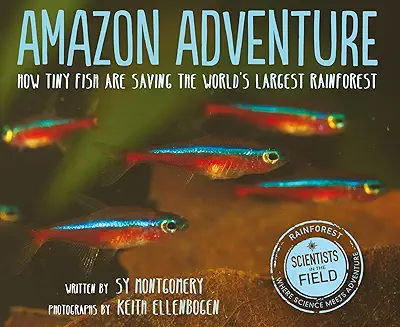
Amazon Adventure: How Tiny Fish Are Saving the World's Largest Rainforest (Scientists in the Field), written by Sy Montgomery, reviewed by Debra Gantz

Summary:  Sy Montgomery takes readers on a journey with scientists to the rainforest to learn about the tiny fish called piaba that are pivotal to the survival of the rainforest that produces most the oxygen on which we all depend. Since there is no way to travel, observe, and learn about the Amazon without learning about the people living there, culture is a key part of this book, as well.

Straight Talk for Librarians:  I plan to share this book with my middle school as I believe it will connect to the science studies in our middle school grades. Since there is no longer a National Geography Bee to prepare my students to compete in, I feel this book set in South America will find its audience elsewhere.
 

Wednesday, September 27, 2023

Life on Surtsey: Iceland's Upstart Island (Scientists in the Field), written by Loree Griffin Burns, reviewed by Debra Gantz

Summary:  A summer research project on an island created by volcanoes brought a small group of scientists (and a writer and a cook) to this new Island off of Iceland. Each chapter has the main text and fact boxes which connect to that chapter. This is part of the Scientists in the Field series that is well know for non-fiction essentials including captioned photographs, Table of Contents, Index, Glossary, and further information. Unique to this book is the Appendix of Icelandic language and culture that are fascinating.

Straight Talk for Librarians:  As is usual for this series the backmatter is formidable and the photography is fascinating. I have students who only read the captions of the photos and the glossary and others who poured over this book from beginning to end. I really loved the Icelandic language information and a bit on the cultural norms in that area. It never occurred to me that it would remind me of what little I know about Gaelic language and culture. My students have not seemed as interested in the language differences, but but there was much chatter among some students about the bathroom issues as the team could not in any way affect the new island and created a plan to care for their body waste.
 

Wednesday, May 17, 2023

Imagine, written by John Lennon, illustrated by Jean Jullien, reviewed by Terry Wahrman

Summary:  John Lennon’s song “Imagine” is put to words.  A little bird flies all over spreading peace and love to the world with an olive branch.  If we do not fight over religion, possessions, or hunger, we might live together in harmony. His journey is long and far reaching.  In the end, the little bird and the other birds he met live as one.  Included in the book is a very nice forward tribute from Yoko Ono Lennon about her husband’s goal of world peace.

Straight Talk for Librarians:  While reading and humming the words in this book,  I couldn’t help but imagine the meaning it has today.  While written during the time of the Vietnam war, it can also be applied to today’s struggle with diversity.  This book of peace using birds of different colors could be used in today’s classroom to teach diversity, love and peace.   Very highly recommended!


Tuesday, May 16, 2023

Three Little Superpigs: Once Upon a Time, written by Claire Evans, reviewed by Terry Wahrman

Summary:  Three little pigs love to play superheroes and mess up the house.  So one day mother told them it was time you move out and find your own homes.  They searched and searched until they came to fairyland. One piggy built a straw home and another piggy built a stick home really fast and spent their days playing.  The third piggy took his time and built a brick home.  Then one day, the big bad wolf came to fairyland.  He blew down the straw home and then the stick home, but he could not blow down the brick home. Wolf tried to get into the brick home by way of the fireplace. He landed in a pot of hot water and was captured.  Wolf went to prison and the whole town celebrated the three Superpigs.

Straight Talk for Librarians:  True to the original story with updated costumes for the Superpigs.  Great beginner reader book and fun to read over and over again. Colorful illustrations and board book cover without a dust jacket makes for easy wipe down.  A definite add to your school collection. Great way to teach patience and perseverance pays off. Highly recommended.